.png)
The Role of Randomness in Fair Casino Gaming: How Chance Shapes Trust and Integrity
Whether you’re spinning a roulette wheel, playing a hand of blackjack, or pressing the button on a virtual slot machine, one concept lies at the heart of every casino game: randomness. The unpredictable nature of outcomes is not just a source of excitement—it is also the foundation of fairness in casino gaming. But what does randomness really mean in this context? How do casinos ensure that games are genuinely random, and why does it matter so much for players and the industry as a whole? In this article, we’ll explore the critical role of randomness in fair casino gaming, uncover the mechanisms that underpin it, and examine how casinos and regulators work to maintain trust and integrity through sophisticated technology and strict oversight.
Understanding Randomness: What It Means in Casino Games
Randomness, in the context of casino gaming, refers to the unpredictability of outcomes in games of chance. A truly random process gives each possible outcome an equal and independent chance of occurring, free from manipulation or predictability. This principle is the backbone of classic games like roulette, craps, baccarat, and slots, as well as modern online casino games.
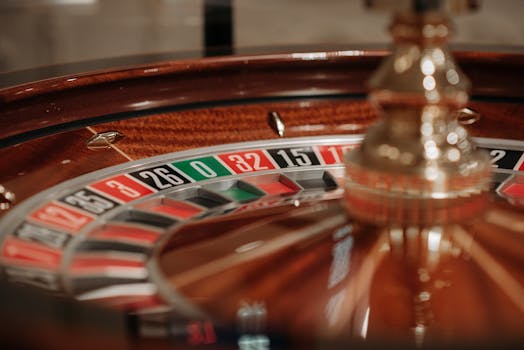
In a fair game: - The roll of dice, the shuffle of cards, or the spin of a wheel should not favor the house or the player beyond the designed house edge. - No one—neither the player nor the operator—should be able to predict or influence the outcome.Randomness guarantees that all players start on a level playing field. It’s the difference between a legitimate game and one that’s rigged or unfair. Without genuine randomness, trust in the gambling industry would erode, and casinos could not claim to offer fair entertainment.
The Mathematics of Randomness: Probability and House Edge
Every casino game is built on mathematical principles, primarily probability and statistics. Understanding randomness requires a look at how these principles are applied:
- $1 determines the likelihood of a specific outcome. For example, the chance of drawing an Ace from a shuffled deck of 52 cards is 1 in 52. - $1 is the mathematical advantage that ensures casinos earn a profit over time. For instance, European roulette has a house edge of about 2.7% due to the single zero, while American roulette’s double zero increases it to around 5.26%.Despite the house edge, the outcome of each individual game round is random. Over thousands of spins or deals, the probabilities even out to the predicted house advantage, but in the short term, players can and do win.
Table: House Edge Comparison for Popular Casino Games
| Casino Game | House Edge (%) | Randomness Mechanism |
|---|---|---|
| European Roulette | 2.7 | Physical Wheel / RNG |
| Blackjack | 0.5 - 2.0 | Shuffled Cards / RNG |
| Slot Machines | 2.0 - 15.0 | Random Number Generator (RNG) |
| Baccarat | 1.06 (Banker) | Shuffled Cards / RNG |
| Craps | 1.4 (Pass Line) | Physical Dice / RNG |
This table highlights how different games use various mechanisms—physical or digital—to generate random outcomes, and how the house edge is mathematically factored in for each.
Random Number Generators (RNGs): The Digital Engine of Fairness
In land-based casinos, randomness is generated by physical means: shuffled cards, spinning wheels, or rolling dice. But with the rise of online casinos and electronic gaming machines, ensuring true randomness requires advanced technology. This is where Random Number Generators (RNGs) come into play.
An RNG is a complex algorithm designed to produce a continuous stream of numbers, each with an equal probability of selection. Modern RNGs used in casinos are pseudorandom, meaning they use mathematical formulas to simulate randomness, but are so sophisticated that the results cannot be predicted.
Key facts about RNGs in gaming: - RNGs are used in virtually all digital casino games, including slots, video poker, and digital table games. - A typical RNG can produce thousands of numbers per second, each mapped to different outcomes (e.g., a specific card or slot symbol). - Regulatory authorities mandate regular testing and certification of RNGs to verify their fairness and unpredictability.A 2022 study by the UK Gambling Commission found that over 95% of online casino games in the UK use independently certified RNG software, ensuring a high standard of fairness.
Testing and Auditing: How Casinos and Regulators Verify Randomness
Public trust in casino fairness depends on more than just technology—it requires ongoing oversight and verification. Independent testing agencies and regulators play a vital role in ensuring that both physical and digital games deliver genuinely random results.
Here’s how the process typically works: 1. $1 Before a game can be offered, its RNG or randomization process is tested by accredited third-party labs such as eCOGRA, iTech Labs, or GLI (Gaming Laboratories International). 2. $1 Regular audits are conducted to analyze game logs and statistical outputs, verifying that the outcomes match expected probabilities. 3. $1 Many online casinos display certification badges or public audit reports to reassure players about the integrity of their games.For example, the Malta Gaming Authority (MGA) requires all licensed operators to submit their RNGs for annual testing. Failure to comply can result in hefty fines or loss of license.
In 2023, over 800 online casinos worldwide underwent independent RNG audits, according to iTech Labs, underscoring the industry’s commitment to fair play.
Randomness and Player Perception: Why It Matters for Trust
The concept of randomness isn’t just a technical detail—it’s crucial for player psychology and trust. When players believe games are random and fair, they’re more likely to enjoy the experience and return for future play. Conversely, any suspicion of “rigged” outcomes can lead to negative publicity, legal issues, and a loss of business.
Some common misconceptions include: - $1 Many players believe slot machines can be “due” for a win, but each spin is independent due to RNG operation. - $1 In well-regulated casinos, dealers cannot influence outcomes, and surveillance systems are in place to prevent cheating. - $1 Licensed online casinos face strict penalties for manipulating outcomes and are regularly audited to prevent such practices.A 2021 survey by the American Gaming Association found that 73% of casino players cited fair and random outcomes as the most important factor in their choice of gaming venue.
Emerging Technologies: Blockchain and Provable Fairness
As technology advances, new tools are emerging to further enhance transparency and trust in casino gaming. One of the most promising is blockchain technology, which enables “provably fair” gaming.
In a provably fair system: - The random seed used for each game round is generated and published before play. - Players can verify, using cryptographic algorithms, that the outcome truly resulted from the published random seed and was not manipulated after the fact.This level of transparency is especially popular in cryptocurrency casinos, where players are often more tech-savvy and demand higher levels of provability. As of 2024, more than 150 online casinos worldwide offer at least some games with provably fair mechanics.
Securing Fairness: The Ongoing Challenge of Randomness
Ensuring randomness in casino gaming is an ongoing challenge that evolves with technology and player expectations. While no system is entirely immune to flaws—such as software bugs or external tampering—the combination of sophisticated algorithms, independent testing, and regulatory oversight provides robust safeguards.
Players should always choose reputable, licensed casinos and look for evidence of independent RNG certification. For the industry, continuous investment in security, technology, and transparency is essential to maintaining the trust that underpins the entire gaming experience.